Showing posts with label Hollywood Production Code. Show all posts

Thursday, February 26, 2015

What You Can Predict About the Oscars

Sheila York

Watching: Season 3: White Collar
Reading: The Drop, Michael Connelly   

You knew what was coming. You knew that the second the Oscars were over, the requisite movie critics’ proclamations would begin about how out of touch Hollywood is with moviegoers.

The biggest moneymaker didn’t win Best Picture.  The movie that did had, at that point, been seen by roughly one-seventh the number of people who watched the Oscars (5 million vs. 36 million). 

Many of the most popular movies of 2014 were ignored entirely in nominations.


Great performances; Total number of people who've seen their movies
probably less than saw them win
How can that be? the critics seem to be saying. How can an industry that regards receipts above all things not want to just hand out statues to whoever’s movies made the most money?

And you knew they’d complain about the show. They always do. What’s that line about insanity being when you do the same thing over and over and expect a different result?

I wasn’t bowled over by the show, either, but I don’t expect to be. Producing that show is an enormous task, especially given the limitations and demands (you have to let Travolta present so he can publicly apologize to Idina Menzel). So I lay on the sofa, cheer for my favorites and drink too much wine. But I guess if you’re a movie critic, you’d lose your job doing that. (The low-expectations/laying-on-sofa part; I think getting sloshed would be fine as long as you made deadline.)

I watch. And when something wonderful happens – like John Legend and Common’s performance of Glory – I am reminded what artists can do and shout hallelujah.

I might have let one series of reviews upset me too much: Michael Cieply and Brooks Barnes’ in the New York Times continued to report that the orchestra played off two documentary-film winners while they were talking about suicide. Messrs Cieply and Barnes, the orchestra did not play those women off while they were talking about a suicide. The orchestra began to play them off after they had reached the limit of allotted time. Then in wrapping up, one of the women said, “…he committed suicide…”.  The orchestra – as soon as a human being would have had time to process that (maybe two seconds) – stopped playing. I’m giving Messrs Cieply and Barnes the benefit of the doubt here and assuming that they actually watched that part, and have not relied for their opinion on Twitter comments.

All right, let’s move on. David tells me I really need to let go of that one.

I’d like to explain the Oscars’ alleged audience “disconnect” with a bit of (very high-points-only) history.

The Oscars were largely irrelevant to audiences before TV almost killed the movies. The Academy was formed in the late 1920s to negotiate labor disputes and improve the image of Hollywood, which it sorely needed, given the uproar regularly created by the content of some silent films. Ask Kate about that!

But rather quickly, it became American films’ historian, librarian, and artistic arbiter with its awards of merit. Established stars won; A-list pictures did too. It was a party given by Hollywood for Hollywood. Of course, studios and stars liked winning, but by the time a movie won, it was no longer in the theaters, and the studios couldn’t cash in on it.  


Then in the early 1950s, TV began its rampage. Movie profits plummeted. Hollywood began to use the awards as a way to help return focus to the movies – and used TV to do it, by broadcasting the show (beginning in 1953). 

And they made flashy films, the sort of thing you couldn't see on the small screen. Spectacle got rewarded in that decade: American in Paris, The Greatest Show on Earth, Around the World in 80 Days, Ben-Hur and The Bridge on the River Kwai (which actually deserved it). 
The Production Code – the censorship that ruled Hollywood beginning in 1934 – had made any forthright examination of complex human emotions and conditions almost impossible. But after WWII, foreign films, mostly European at that time, began getting attention. 

They were experimental, edgy, and dealt frankly with real life – Whoa there, Mr. De Sica, you have a scene in a brothel? No way. Cut that out of The Bicycle Thief, or we won’t show your movie over here in the good old US of A. Still audiences turned out to see it in very limited release – uncut.

The Code continued to weaken as more and more of the US audience wanted more complexity, and Hollywood wanted to find something to get those baby boomer butts into the theaters. In the 1960s, prosperity put considerable disposable income in the hands of teenagers for the first time. And while there were certainly big-budget, broad-appeal films like The Sound of Music, you could also find gritty, brutally honest movies without happy endings – hello, Midnight Cowboy. They got screen time and took home awards.

Then Hollywood discovered the Blockbuster in the late 70s (Jaws – nominated; Star Wars – not) and not long after, Oscar began getting thumped soundly for not recognizing all that money being made.

That thumping, however, coincided with the growth of “small films”.  Producers and distributors appeared for less expensive movies because the audience and available venues were expanding in number.  Then the Oscars, looking to get more big films nominated, expanded the Best Picture nominee list to as many as 10 films. Which resulted in more small films being nominated. And winning. And more of those films' artists being invited to join the Academy, and more small films being nominated, and ... I’m getting a little dizzy from the going round in circles.

Which brings me to . . .

I haven’t seen all of Birdman, which won Best Picture. I did hear all of it, though. The currently very popular loose-camera technique – where the camera joggles and swings as it records action – makes me nauseous. Not figuratively, because I really like the right-in-the-action feel it can give. I mean literally nauseous. After 20 minutes, I'm carsick. In some movies, (and it happened in Birdman) I have to close my eyes, take off my socks and shoes, and put my bare feet on the cold (sticky) floor to keep from sharing my grief with the back of the head of the person in front of me.

I don’t have the same reaction on a small screen, so I can watch the whole movie soon on Blu-ray.

My favorite film of the year was Guardians of the Galaxy. Too bad Groot couldn’t present the best-support Oscar. Now I think on it, if nominees had been required to come from big-money movies, Bradley Cooper would have been nominated twice – for American Sniper and as the “I’m not a raccoon” in Guardians. (Guardians could also have won had there been a category for best use of music from other decades.)

After that, these are the rest of my favorites of the movies I saw in 2014 – in no order whatsoever. I recommend them.
 
The Grand Budapest Hotel
Whiplash
Selma
Gone Girl
Non-Stop
Get on Up
The Imitation Game
Edge of Tomorrow (or Live. Die. Repeat.)
The Theory of Everything
Big Hero 6
Divergent
Begin Again
Wild
The 100-Foot Journey
Chef

They were among David’s favorites, too, but he’d like to add these:


The Hobbit: The Battle of the Five Armies
John Wick
Maleficent
Captain America: Winter Soldier 


Copyright 2015 Sheila York

Thursday, September 26, 2013

Watch on the Hudson

Last week, I spent a few days at Bouchercon, the largest of the US mystery writer/fan conventions, held this year in Albany, New York, a couple of hours up the Hudson River from my house.

Four swell things happened up there.

One, I was assigned a terrific panel on amateur sleuths, with Catherine Astolfo, Kate George and M.K. Graff. Here’s a pic of me with moderator Nora McFarland, who did a tremendous job – preparation is the key to spontaneity (and lots of laughs)!

Second, Rose and Robert Knightly threw a buffet dinner for writers and readers at their lovely townhouse in Albany. It was the only location associated with the conference that did not seem to be uphill both ways.

Third, I discovered my opening line to the fifth Lauren Atwill mystery. [Book number 4 in the series is already cuddled up with the publisher, ready to go out next spring.] It’s weird how one line can generate so much enthusiasm to get to the computer each day.

Four, I was able to share with an audience of mystery fans a portion of the screenshow I've created for presentations at libraries. Called “You Can’t Put That in the Movies”, it’s about the Production Code censorship in Hollywood in the Golden Age of Film. [I blogged a bit about the Code back on April 25.] It’s always good to get your work out before an audience: I saw I needed to shorten it, to allow for more discussion afterward.

There’s one part of the presentation I’m pretty sure I’ll never cut: The Production Code vs. Watch on the Rhine.

Let me tell you the story, briefly (I promise).

The 1943 film Watch on the Rhine is based on a stage play by Lillian Hellman. Warner Brothers wanted to turn it into a movie, and had submitted a preliminary script for Production Code Administration (PCA) review as was required by the Code office. 

Spoiler Alert! Watch on the Rhine is set in 1940, when Europe is at war but the US remains on the sidelines. Its hero is Kurt (Paul Lukas, who played the role on Broadway), an engineer who’s been working in Europe and has returned to the US with his family to visit relatives of his wife (Bette Davis, who took a smaller role than she normally would because of her strong opinions about the subject matter). It becomes clear along the way that Kurt has been working with and raising money for anti-Nazis in Europe. When one of a network of operatives is arrested, Kurt’s determined to go back to try to free the man, at great risk to himself. The villain of the piece, a Romanian count called Teck, discovers all this, and threatens to go to the German embassy with his information unless his silence is purchased. Kurt kills him.

The PCA had some ‘suggestions’ for the final script. One in particular astonished and disgusted the playwright Hellman, and here’s part of the letter she wrote to the Code office. (I found the letters included here during research at the Margaret Herrick Library of the Academy of Motion Picture Arts and Sciences in Los Angeles.)

In the red-framed portion, she says “There is, however, one suggested change which I find deeply shocking. Your office says that, in order to have Teck killed by Kurt, it must be established that Kurt will be assassinated if Teck reports him and that, having killed Teck, it must be clearly established that Kurt has been finally killed by the Nazis.”

Yep, the PCA wanted Kurt to die.


Today in film, we grant vigilante rights to anybody who could even marginally be considered a protagonist. But the PCA took seriously its rule that crime cannot pay. Criminal acts – for example, taking the law into one’s own hands – were not allowed to go unpunished.

Here’s part of the letter Joe Breen – who was in charge of administering the Code – wrote to his boss, Will Hays, about the situation, no doubt in anticipation of the uproar that might occur if Hellman went public. Remember that in 1943, the US was fighting Germany in World War II.


He contends that in the movies under the Code, the law "can not be suspended, even when there is great provocation and even when we are at war." No matter the circumstances of a movie, no exceptions should be made.

And the PCA had the last word: they had to approve your script and your movie.


How did all this end?

No matter that America was at war, and that anti-Nazis were risking their lives every day in Europe, the Code office could not bring themselves to allow a man to kill another outside the framework of the justice system, even in the circumstances set forth in the script. In the released film, Kurt does kill Teck, and Teck is unarmed when it happens. Although the killing is committed offscreen, it remains a shocking moment when this good man marches Teck away. Kurt returns to Europe and communication is lost (which would not have been unusual in time of war). He is missing, but there is still hope he could be alive, which is the play’s original ending. The compromise from the PCA was to allow the movie to retain it.

What Breen's (and the Code's) position ends up accomplishing of course is to make it very difficult to portray the risks faced by the anti-Nazi underground in Europe.

Lots of books have been written about Hollywood’s neglect of social and political issues beginning from the moment the Code was adopted in 1934, and about Hollywood's unwillingness to take an on-film stand against Nazi oppression, particularly of Jews, after it was clear what was happening in Europe with the rise of Nazism and even after America got into the war. While it’s true that Hollywood was careful not to offend the Hitler regime in the 1930s (and threaten overseas revenues) and that the PCA even allowed the German attaché in Los Angeles on occasion to review draft scripts during that period, the industry was largely held hostage, not by Europeans, but by the considerable power of what most of us today would consider extremist views inside the United States – racial, religious, ethnic. Studios were very reluctant to endanger their domestic business by opening themselves up to vitriolic charges that they were making "political" movies, advocating certain kinds of social change or promulgating before Pearl Harbor American involvement in what was often referred to as a "Jewish war" in Europe. 

Hollywood was not alone in kowtowing to the power of those who advocated these views, but some other American corporations went even further, with some of their leaders (see Henry Ford for one) publicly and enthusiastically embracing shockingly racist and anti-Semitic views.

But unlike those companies, Hollywood left behind a powerful visual history of what it had done. Or not done.


© 2013 Sheila York

Thursday, April 25, 2013

A Drink with the Hollywood Production Code

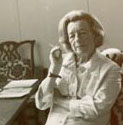
Sheila York writes the Lauren Atwill mystery series. Her amateur sleuth is a screenwriter in post-war Hollywood, chasing killers in the last hurrah of the Great Golden Age of Film. Lauren’s latest adventure is Death in Her Face.


I’m excited and flattered to have been invited to be a regular player on this team. And maybe a bit nervous. Where to start? How about at the beginning?

I came to crime writing early and late.

I was an extremely shy child, a condition not improved by my family’s frequent moves. My father was a career army officer, and we moved 6 times before I was 10. My solace was books, and I thought the best job in the world would be Writer: independence, recognition and something I could do in solitude. I thought maybe I had some talent for it, too, as I two-fingered my way around my portable Royal, a candy cigarette dangling from my lips because I’d seen a picture of Lillian Hellman in Life magazine.

Sheila York
But unlike Lillian, my instinct was to write crime. For every creative-writing assignment in junior high and high school, I crafted mysteries, often romantic mysteries. But, of course, teachers back then weren’t looking for those. They were looking for feints at literature. This was, after all, ‘college prep’. Along the way, my insecurity and the dissuasion of my instinctive efforts convinced me that whatever skill I possessed must be no more than an average example of students in my town, which at the time had fewer people than the closing credits in The Hobbit.

Lillian
Hellman
It took a few decades before I finally asked, “If not now, when?” Then with the determination only possible in someone clueless about publishing, I decided to set a mystery in 1940s Los Angeles. Even after people warned me it was risky territory, I persevered. If there’s a characteristic I share most deeply with my heroine, Lauren, it’s stubbornness.

From the beginning, there was never any doubt in my mind that my sleuth would be an amateur and a woman, that she would meet a private detective with a troubled past, that he would be the love of her life. And she would be the one who ultimately caught the killers. But how does a woman in the 1940s find scandal, corruption, betrayal, greed, sex, and murder?

No brainer. She had to work in Hollywood.

And I love movies. From all decades, but I’m a particular fan of the 1940s, when some of the best films ever made were produced. Part of what I admire about them is the ability to tell a good tale while navigating the severe restrictions of the Production Code, the set of rules that controlled the morals of American movie content from 1934 till 1968 when the Code was replaced by an early version of our ratings system. The studios agreed to be ruled by the Code in part to pacify local censor boards and religious groups who found films of the silent era and the early 1930s too sexual and violent, a threat to family life, and a bad influence on youth.

Every script and every film’s final cut had to be approved by the PCA (the Production Code Administration). Its primary rule was “No picture shall be produced which will lower the moral standards of those who see it.”

Wow, how exactly do you assure that? By adopting the most conservative values in America.

Today, I thought I’d share a bit about three things I know well: The Production Code, movies and drinking. Okay, that didn’t come out right. The Production Code, movies and drinking in the movies. Although, full disclosure, I’m quite fond of a glass — or two or three — of wine. (You can always find the hotel bar at a writers convention. Just follow the game trail in the lobby carpet.)

The Code spends most of its efforts on sex and crime — and ensuring neither one looks appealing — but it also makes clear how studios should treat booze. “The use of liquor in American life, when not required by the plot or for proper characterization, will not be shown.”

This makes it kind of hard to throw a party. Or run a bar.

So let’s visit briefly the most famous bar in the movies: Rick’s Café Américain in Casablanca, which does a fine business for a place where alcohol is rarely actually consumed. In a movie that takes place almost entirely in bars, drinks are constantly ordered, poured, carried, deposited, picked up, held and raised to the lips, but you can count on your fingers and toes the number of times characters swallow. Let’s see how many swallows make a movie.

His heart breaking after seeing his lost love again, Rick (Humphrey Bogart) sits alone in the darkened club getting drunk, a nearly empty bottle beside him, and delivers one of the most quoted lines in movie history — “Of all the gin joints in all the towns in all the world, she walks into mine”. How much does he drink in his misery? Three swallows. Three. In that whole classic, world-famous scene.

Earlier, when Ilsa (Ingrid Bergman) and underground hero Victor Laszlo (Paul Henreid) first come to Rick’s, four rounds of drinks are ordered, three at their table and one when Victor goes to the bar to meet a contact. Glasses move to lips, but how many swallows do you see? One, and that’s a paltry sip.

In Death in Her Face, when a sultry starlet with a mysterious past vanishes and her gangster boyfriend turns up dead, my sleuth, Lauren, is hired to rewrite the script for another actress should the starlet turn out to be a killer in more than looks. (Of course, Lauren is neck deep in the investigation within 24 hours.)

Besides prohibitions on liquor, here are just a few of the rules Lauren has to keep in mind:

  • The guilty must be punished. Don’t create sympathy for criminals.
  • Keep marriage sacred. Adultery should not be excused or justified (Casablanca also slips around this one very neatly).
  • No mocking of religion or those who minister in it (who also can never be villains unless they are historical characters).
  • No prostitutes (women who plied the trade in novels ended up as taxi dancers in the film version).
  • And my personal favorite: No representation of anything that would look like advice to criminals. A thief couldn’t tell another, “Hey, put some gloves on before you touch that.”

The next time you’re watching a film from the Great Golden Age, you might think a little about these restrictions and the creative artistry required to tackle adult themes and occasionally make magic.

Sheila York