Wilkie Collins’ THE MOONSTONE is a lot of things: a traditional 19th Century British Victorian Novel complete with a marriage plot; the first detective novel in English; a commentary on the social condition of a changing England in the mid-19th century and of English Imperialism; and, for its time, a lurid and sensational thriller about of theft and murder.
Although a work of literature can certainly be judged by “universal” standards—on its ability to portray complex characters that somehow speak to the reality of our shared humanity, on the precision and appropriateness of its form and structure, on its use of metaphor and telling detail—it can also be quite telling, and of no little interest, to see it through the lens of the time and place which at least partially produced it.
England was changing in the mid 19th century—industrialization and urbanization had produced both a miserable abject working class and a growing middle one; THE COMMUNIST MANIFESTO was followed by violent proletarian uprisings in France and Germany; calls for universal suffrage and equal rights were heard throughout England; and the traditional aristocracy and the clergy felt under attack by: the sensational press; calls for reform; protests against imperialism; demands for the vote; Oriental debauchery and godlessness imported by immigrants from conquered lands; the corruption of the gentleman’s code, which itself was threatened by a system not of a self-contained and semi-autonomous agrarian fiefdom but of one ruled more and more by government and where the voices of the lower and middle classes were now being heard; the city, where con man and card sharks, opium dens and workhouses and brothels and insane asylums seemed to be tearing at the foundations of the Empire….O, God Save the Queen!
The tale begins with one of those families, the Herncastles, who would make an admirable “upstairs” installment on a BBC show like Downton Abbey. We learn, through an unnamed cousin, that one of the five children of Lord and Lady Herncastle, John, a soldier in the British Army in India, has committed a war crime, not by massacring civilians, but by stealing a diamond sacred to the “Hindoos” and by killing fellow soldiers to keep it. So right off the bat we have the code of honor (or should I write honour?) of the British Gentleman transgressed.
The story is handed off to Gabriel Betteredge, a kind of head servant on the estate of Lady Verinder, and boy does he run with it. The technique of having different characters give testimony in this way mimics a courtroom, and seemed modern at the time, but it also allows, through the first person narration of the different characters, for a lot of irony and humor and insight. Betteredge is at one and the same time most loyal servant and one capable of scathing criticism of his betters.
Lady Verinder’s (sister of John) daughter Julie receives the diamond as a blessing/curse from her deceased uncle, who knew that “Hindoo” fanatics were willing to track the diamond to the ends of earth and time in order to return it to its sacred place in India. Two of her cousins, Godfrey Ablewhite (you’ve got to love some of these names) and Franklin Blake, along with a servant girl, Rosanna Spearman, are implicated in the inevitable disappearance of the jewel.
Betteredge is a curmudgeonly old guy who uses Robinson Crusoe as a Bible, and who does a kind of Bibliomancy with it, using it to understand everything that has happened and to divine everything that will. He tells us, when Franklin Blake asks him to recount, in written form, all he knows of the crime (in order to re-enact it, another trope of these detective stories) that he had just read in Crusoe the following “now I saw, though too late, the folly of beginning a work before we count the cost….”Betteredge takes this as a sign that the re-telling is going to be a waste of time, but being a good servant, he launches into the tale anyway. He goes on to comically observe that Blake, who has spent a lot of his formative years on the continent, has got a kind of frivolous and fractured personality, doing better when the British part of him is foremost, but getting lost when the French part (too emotional) or the German part (too rational) get the upper hand. Apparently, the French and the German represent two extremes, and the British character the proper synthesis of the two. It is funny, this, and the fact that Betteredge the servant is allowed by Collins to have the longest period of narration in the book is indicative itself of the changes going on in society at the time.
There is also outright, almost slapstick, comedy. Drusilla Clack (another narrator) is a poor relation and true believer who hangs around the family trying to make them more godly, more chaste and meek and pure, all the while missing the fact that she is monstrously prideful in her perception of herself as the savior of all mankind, and in her condescension to all those who don’t share her vision. I got a great laugh out of her loony proselytizing, some of which consisted of this: “Let your faith be as your stockings, and your stocking as your faith. Both spotless and ready to be put on at a moment’s notice.” Collins doesn’t really go so far as to ridicule good old Miss Clack—he lets us see the forlorn and hidden passions that manipulate her from below. She is as unlikely to ever get the man she loves (Godfrey) as Rosanna Spearman is to get Franklin Blake. She tries to tell herself that she loves him only for his virtue, although she is tongue tied and on the verge of fainting from desire whenever she is in his presence.
And so the Diamond goes missing. Enter Inspector Cuff, stage right, a kind of secular clergyman sent to look after the flock, but who also brings city ways to the country estate. He levels the traditional playing field by insisting on interviewing everyone, not just the servants, but the lords and ladies too, about the theft. Cuff is the ultimate outsider, a single man with no apparent emotional connection to anything, or anyone, except roses. And he is a kind of proto Holmes in his obsession with minute detail, with the inductive process, the reasoning from the effect back to the cause (more Baconian and scientific while being less deductive, less in the way of received and traditional wisdom, like that dispensed by the Church and the Aristocracy).
Throw in Ezra Jennings, a mixed race doctor with a mysterious illness and a mysterious past, who is up on psychology and mesmerism and the details of opium use and abuse (another threat to the old order, although a lot of those blue blood types dabbled in laudanum and paregoric, and their use was not yet outlawed, and a lot of the nouveau riche were newly rich because of the opium trade in China) and you have the two outsiders who threaten to, or are needed to, solve the mystery for their “betters.”
There are a lot of side plots here, and cliffhangers, mysteries within mysteries, and it is great fun. And there are great contrasts, some of them critical of the aristocracy, and some of them seeming to champion it. Rosanna Spearman falls in love with Franklin Blake, who of course doesn’t give her the time of day (she’s ugly as well as a servant), not because he is cruel, but because he doesn’t know how to deal with someone below his station, and in her envy of his love for Julie Verinder, she says “it does stir one up to hear Miss Rachel called pretty, when one knows all the time that it is her dress that does it, and her confidence in herself.”
Of course, there are blackguards involved, but in the nature of blackguards (love that word), they are disguised—disguised in a more conscious and ill-natured way than Julie hides her plain-ness with her clothes. The corruption of blackguards is concealed with a veneer of uprightness and piety, and of gentlemanliness.
Delightful is the contrast of the completely evil John Herncastle, who at least has the guts not to hide his true nature, with the members of the family who appear honorable, seem to be good lords and ladies, who look to be following the code. It is part of the fun of the novel to divine the true natures underneath the masks people wear.
Sergeant Cuff and Ezra Jennings exist outside both the older and new orders, and yet perhaps they can see people truly. For those who are lovers of the old order, see if it is upheld in the end, see who is really an aristocrat, and if being one is rewarded or punished. Either way, it’s a ripping good yarn as well as a surprisingly nuanced look at a time in history when it was a mystery to all what would become of the old values in a new world.
© 2015 Mike Welch
Showing posts with label Detective stories. Show all posts
Saturday, February 7, 2015
Tuesday, October 14, 2014
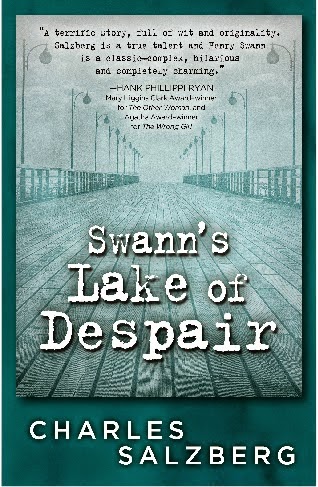
Award-winning Crime Novelist Charles Salzberg Strikes Again
Fans of Charles Salzberg's Henry Swann will be pleased to know that the third in the series comes out a week from tomorrow. A New York-based novelist, journalist and acclaimed writing instructor, Charles is the author of Devil in the Hole, chosen as one of the Best True Crime Novels of the Year by Suspense Magazine, and the Henry Swann detective series featuring Swann’s Last Song, which was nominated for a Shamus Award for Best First PI Novel; Swann Dives In; and the upcoming Swann’s Lake of Despair.
I never planned on being a crime writer. And yet it probably turned out to be the best thing possible for my writing career, which began for me, as it did for so many other English majors, with a desire to write the Great American Novel. But I was self-aware enough to know I’d never write a great novel, one that came even close to my heroes, Nabokov, Bellow, Roth and Mailer. Instead, I was willing to settle for a good literary novel.
But when I realized that wouldn’t pay the rent I stumbled into a career as a magazine journalist. Although I wrote about pretty much any subject under the sun, I was always fascinated by crime and even worked on a true crime book called Dead End. But I never stopped writing fiction and about 25 years ago what started out as an experiment in writing what a friend of mine called, “an anti-detective novel” ended up as a novel called Swann’s Last Song. The novel begins with a murder having already taken place and there are several other random unconnected killings along the way, but it’s really about identity since Swann, who abhors violence and whose specialty is finding lost people, winds up not trying to find the murderer but rather to find out who the victim really was and, along the way, who he is. I, of course, thought it was a brilliant idea, but agents and publishers didn’t share my enthusiasm. And so, for twenty years the novel languished on my computer, until I dusted it off, updated it, and finally “sold out” by having Swann solve the crime. Boom! It sold. (You can actually find my original ending in the paperback edition.)
Although written as a one-off (in the original version Swann becomes so disillusioned he quits the business), to my surprise it was nominated for a Shamus award and when I lost I got pissed off enough to decide I’d keep writing them until I won something.
With no offense to my fellow crime and mystery writers, because I admire so many of them, I decided to take a different path within the genre. Each Swann novel was going to present me with a different challenge. To me writing the traditional detective mystery, where there is a dead body, a host of likely suspects, the detective solves the crime and the book ends, was a kind of death in itself. The truth is, I couldn’t do that even if I wanted to, because I’m not particularly good at tight plotting nor with lining the pages with clever clues for the detective and reader to follow.
Instead, I decided to not only focus on character but also push the envelope in terms of what people might expect in a detective novel.
For instance, in the second in the series, Swann Dives In, not only are there no dead bodies but the reader isn’t quite sure what the crime is until more than half-way through the book and by the end of the book isn’t even sure a crime was committed.
In the third in the series, Swann’s Lake of Despair, I set myself another challenge. I would have Swann investigate three separate cases at the same time, each unrelated to the other, none of them involving murder.
Why? Because to me murder is overrated. On TV each week the viewer is assaulted with perhaps twenty to thirty murders—and in a show like The Following, there can be that many murders in a single episode. But in real life, how many of us are actually affected by murder? Sure, we read about them in the newspapers and hear about them on the television news, but for the most part, it’s not our reality. On the other hand most of experience or even commit other kinds of crimes every day, sometimes more than one. They might be petty crimes, like stealing supplies from where you work. Breaking a loved one’s heart. Cheating on a test. Lying. Misrepresentation. These crimes might not be punishable by a stint in prison, but they are crimes nonetheless. And they can be very personal crimes: crimes that might hurt us deeply.
These are the kinds of crimes I’m more interested in writing about and these are the crimes Swann is called on to solve.
Thinking back, I realize I was profoundly influenced by a 1960s television series called The Naked City. What would be called a police procedural today, there was, of course, a crime committed every week. But often these crimes did not involve murder. Instead, the show, which had “eight million” stories from which to draw, focused on character, deceit, unhappiness; on broken hearts as much as broken heads.
This is what I tried to capture in Swann’s Lake of Despair. In one case Swann is hired by a distraught fellow whose girlfriend has disappeared. His heart is broken, he feels betrayed. In another, Swann seeks to find a lost journal that might shed light on an eighty-year old death that might or might not have been murder or suicide. In the third, he’s hired to find a portfolio of lost photographs by a long since deceased photojournalist. The latter was inspired by a friend and former student of mine, Julia Scully, a wonderful writer whose second memoir in progress (her first was called Outside Passage and was published to wide acclaim), told about her life as an editor in the world of photography in the 1950s and ‘60s. Julia allowed me to ransack her life for this plotline.
And so, if you’re looking for dead bodies, you probably won’t find them in my Swann books. But then again, I love to break rules, even my own, and if it just “happens” organically in the plot, well, you never know, blood might just flow someday.
© 2014 Charles Salzberg
I never planned on being a crime writer. And yet it probably turned out to be the best thing possible for my writing career, which began for me, as it did for so many other English majors, with a desire to write the Great American Novel. But I was self-aware enough to know I’d never write a great novel, one that came even close to my heroes, Nabokov, Bellow, Roth and Mailer. Instead, I was willing to settle for a good literary novel.
But when I realized that wouldn’t pay the rent I stumbled into a career as a magazine journalist. Although I wrote about pretty much any subject under the sun, I was always fascinated by crime and even worked on a true crime book called Dead End. But I never stopped writing fiction and about 25 years ago what started out as an experiment in writing what a friend of mine called, “an anti-detective novel” ended up as a novel called Swann’s Last Song. The novel begins with a murder having already taken place and there are several other random unconnected killings along the way, but it’s really about identity since Swann, who abhors violence and whose specialty is finding lost people, winds up not trying to find the murderer but rather to find out who the victim really was and, along the way, who he is. I, of course, thought it was a brilliant idea, but agents and publishers didn’t share my enthusiasm. And so, for twenty years the novel languished on my computer, until I dusted it off, updated it, and finally “sold out” by having Swann solve the crime. Boom! It sold. (You can actually find my original ending in the paperback edition.)
Although written as a one-off (in the original version Swann becomes so disillusioned he quits the business), to my surprise it was nominated for a Shamus award and when I lost I got pissed off enough to decide I’d keep writing them until I won something.
With no offense to my fellow crime and mystery writers, because I admire so many of them, I decided to take a different path within the genre. Each Swann novel was going to present me with a different challenge. To me writing the traditional detective mystery, where there is a dead body, a host of likely suspects, the detective solves the crime and the book ends, was a kind of death in itself. The truth is, I couldn’t do that even if I wanted to, because I’m not particularly good at tight plotting nor with lining the pages with clever clues for the detective and reader to follow.
Instead, I decided to not only focus on character but also push the envelope in terms of what people might expect in a detective novel.
For instance, in the second in the series, Swann Dives In, not only are there no dead bodies but the reader isn’t quite sure what the crime is until more than half-way through the book and by the end of the book isn’t even sure a crime was committed.
In the third in the series, Swann’s Lake of Despair, I set myself another challenge. I would have Swann investigate three separate cases at the same time, each unrelated to the other, none of them involving murder.
Why? Because to me murder is overrated. On TV each week the viewer is assaulted with perhaps twenty to thirty murders—and in a show like The Following, there can be that many murders in a single episode. But in real life, how many of us are actually affected by murder? Sure, we read about them in the newspapers and hear about them on the television news, but for the most part, it’s not our reality. On the other hand most of experience or even commit other kinds of crimes every day, sometimes more than one. They might be petty crimes, like stealing supplies from where you work. Breaking a loved one’s heart. Cheating on a test. Lying. Misrepresentation. These crimes might not be punishable by a stint in prison, but they are crimes nonetheless. And they can be very personal crimes: crimes that might hurt us deeply.
These are the kinds of crimes I’m more interested in writing about and these are the crimes Swann is called on to solve.
Thinking back, I realize I was profoundly influenced by a 1960s television series called The Naked City. What would be called a police procedural today, there was, of course, a crime committed every week. But often these crimes did not involve murder. Instead, the show, which had “eight million” stories from which to draw, focused on character, deceit, unhappiness; on broken hearts as much as broken heads.
This is what I tried to capture in Swann’s Lake of Despair. In one case Swann is hired by a distraught fellow whose girlfriend has disappeared. His heart is broken, he feels betrayed. In another, Swann seeks to find a lost journal that might shed light on an eighty-year old death that might or might not have been murder or suicide. In the third, he’s hired to find a portfolio of lost photographs by a long since deceased photojournalist. The latter was inspired by a friend and former student of mine, Julia Scully, a wonderful writer whose second memoir in progress (her first was called Outside Passage and was published to wide acclaim), told about her life as an editor in the world of photography in the 1950s and ‘60s. Julia allowed me to ransack her life for this plotline.
And so, if you’re looking for dead bodies, you probably won’t find them in my Swann books. But then again, I love to break rules, even my own, and if it just “happens” organically in the plot, well, you never know, blood might just flow someday.
© 2014 Charles Salzberg
Monday, October 6, 2014
Motiveless Malignity, Women and Travis McGee
John D. MacDonald, in the Travis McGee mystery A TAN AND SANDY SILENCE, gives us a hero in McGee that is in some ways an update on the character of Sam Spade in THE MALTESE FALCON, by Dashiell Hammett, and of Philip Marlowe, in both THE BIG SLEEP and The LONG GOODBYE, by Raymond Chandler, and that in some ways is a character all his own. This is what a good author does—he goes both with and against the grain of the genre he or she and his or her characters inhabit. In McGee, MacDonald creates a character whose modus operandi in solving crimes and whose relationships with women are significantly different than those of both Marlowe and Spade.
The last of the novels of Hammett and Chandler was THE LONG GOODBYE, from 1953. A TAN AND SANDY SILENCE hails from 1970. 1953 to 1970. From the pre-Elvis era to the final year of the Beatles’ existence. From Chevy’s with tail fins to Toyotas; from Ike to Nixon; from Korea to Viet Nam; from the conservative utopian dream of the Fabulous Fifties to the liberal dreams of the 60’s—equality, peace love truth and beauty—to the beginning of the cynical 70’s, where Nixon resigns, athletes are slaughtered in Munich, we begin to lose our world economic dominance and finally, worst of all, disco displaces rock and roll. And that was only 17 years?
One of the things that separate the 50’s from the 70’s is the popular attitude towards psychology and especially “therapy.” You never would have had the Bob Newhart show in the 50’s. In the 50’s, psychologists and psychiatrists were for crazy people, and in the 70’s you were crazy if you didn’t want to go to therapy. You wouldn’t see Marlowe or Spade analyzing suspects or themselves in the explicitly psychological fashion that McGee does in A TAN AND SANDY SILENCE, but McGee does.
McGee is still an old-school, hard-boiled private eye like Marlowe who, in THE BIG SLEEP, says that this world is not one for knights, that chivalry is dead, but then turns around and does the knightly thing, the mitzvah, the good deed, and generally tries to be a stand-up guy. McGee, however, wonders if his own macho gallantry is just a sham. He claims to be a “tinhorn knight on a rent-a-steed,” and wonders if his masculinity is really just a cover for his fear of social rejection and his fear of the death he is always courting. He even questions why he must always court such oblivion: “I’m hooked on the smell, taste, feel and the nearness of death.” This is an observation Marlowe probably wouldn’t, or couldn’t, make.
Indeed, this kind of psychologizing is not really the kind of thing that the tough guys of the Golden Age of Detective Fiction went in for. Those guys knew what was what and who was who because of what they felt in their guts, and they didn’t apply any kind of psychological scaffolding to themselves or their suspects in order to figure out how they were built.
In fact, psychology, or at least therapy, comes in for a lot of bashing in both Chandler novels, such as when one of the members of the LA police force tells Marlowe in THE BIG SLEEP that the force could stop all that murder and extortion and rape if only they could sit down with those maladjusted crooks and talk to them about their mothers. To those namby-pamby psychologist types, everything could be explained in terms of failure at some stage of development, which makes the world a less scary place, but is somewhat less than realistic. Motiveless malignity? No, just a little bit of a developmental misstep, a trip, a hiccup, at the anal or oral or phallic stage. We’ll go back and fix it, the shrinks say. Just edit the person, you might say, the way an author edits a book.
Marlowe and Spade do depend on a deep understanding of human nature, of the nature of both others and themselves, but they don’t go in for self-doubt too much. Marlowe has what he calls an “insubordination problem,” and Spade seems to have one too, but neither worries about where it comes from. And certainly you can understand someone and even yourself without resorting to the tools and methods of the I’m-Ok-You’re OK-and-everything-will-be-OK-if-we-just-learn-to-really relate- to-one-another school. It makes one wonder how Shakespeare ever got along without Freud. How did he create those characters of his, with all their repression and sublimation and projection and transference, without even knowing what those things were? Of course, if Richard II or King Lear got too in touch with themselves they wouldn’t be such great characters.
McGee and/or MacDonald also go in for the psychological analyses of others. McGee’s pal Meyer says of Paul Dissat, who uses his sister Lisa to try to extort money from Mary Dillon’s (McGee’s old friend and lover) second husband, and who kills Mary when the plot turns sour: “He’s not a madman in any traditional sense. He cannot feel guilt or shame. If caught, he would feel fury and indignation at the game’s ending too soon…… He isn’t aware of evil. Only of being caught.” It’s hard to imagine Marlowe or Spade doing such an analysis, although they would have been able to see Dissat for what he was.
McGee says of Lisa Dissat, the femme fatale of the novel: “She went away and spent a dozen years corrupting because she believed herself corrupt, debauching because she had been debauched, defiling because she was the virgin defiled.” He doesn’t just recognize the evil in her, like Marlowe would have, he looks for its origins and explains them in a typically 70’s way, a way that would have seemed alien in the 50’s.
Just as with Marlowe and Spade, there is an element of deception and cruelty in the way McGee treats women who might be called “femme fatales.” However, his relationships with other women go beyond both sex and the use of sex as a tool for manipulation. You might even say they are psychologically healthy. He has a genuinely lustful and affectionate relationship with Jillian Brent Archer, but when she offers marriage and a life of extreme wealth to him, he turns her down on the same terms Marlowe turns down Linda Lorring—he’s too used to his independence and he doesn’t want to be a lap dog, even a pampered one. Still, McGee doesn’t list the ephemeral nature of love and desire or the impossibility of relationships that are both lasting and healthy as one of his reasons for turning her down.
It is McGee’s relationship with Mary Dillon that is the healthiest of all. He nurses her back to emotional health after she breaks up with her husband, without sex being the goal of his kindness, and she turns to him for solace when she realizes there is no quid pro quo involved in their association.
Macdonald allows McGee’s quest for some kind of romantic fulfillment form a compelling subplot for the book, and he attacks the 70’s pseudo psychological babble about relationships while he is at it. He wonders aloud to Meyer whether his 70’s style enlightened sexual ethos is just bullshit: “we must not hurt each other or anyone else, darling. There has to be giving and talking on both sides… I won’t hurt you. I just want to screw you and make you a more sincere and emotionally healthy woman….it sounds like glossy sales talk. I was kidding them. I was kidding myself.” He talks about how the mystery and magic has been taken out of sex, and about how some of his progressive attitude is just because he fears commitment. Thank goodness he doesn’t use the word commitment. I just couldn’t stand to hear a hard case like him use such an effete word.
I don’t think McGee’s use of psychology in one breath to understand the criminal mind and his condemnation of it vis-à-vis sex in the next is a problem. MacDonald has merely created a complex character capable of contradiction. That complexity makes the character more believable, not less.
As for the plot, of course McGee kills Dissat. The two scenes where McGee escapes the evil killer are a little ridiculous, but I didn’t care.
OK, the same somewhat contrived plot in both the fifties and the seventies, I thought. And the same kind of black humor. When Dissat corners McGee and his friend Myer, holding a nail gun on them, McGee skewers both Dissat and the advertising industry by saying: “He was like a color still shot for those ads Canadian Club used to use. (“I never knew how challenging it could be to hold two men captive with an automatic nailing device until I tried it”).”
In the end, McGee learns to live with the contradictions within him. He tries a relationship again, takes a chance on romance, and his friend Meyer tells him that, even though he may be an adrenaline junkie whose ironic self detachment is just a silly pose: “Don’t suffer all over me McGee. You’re a good man. There is no man alive who is not partially jackass.” Even if I didn’t know that MacDonald wrote another sixty McGee novels, I could have told you that McGee, managing all those contradictions like a juggler, would be back fighting evil, too.
© 2014 Mike Welch
The last of the novels of Hammett and Chandler was THE LONG GOODBYE, from 1953. A TAN AND SANDY SILENCE hails from 1970. 1953 to 1970. From the pre-Elvis era to the final year of the Beatles’ existence. From Chevy’s with tail fins to Toyotas; from Ike to Nixon; from Korea to Viet Nam; from the conservative utopian dream of the Fabulous Fifties to the liberal dreams of the 60’s—equality, peace love truth and beauty—to the beginning of the cynical 70’s, where Nixon resigns, athletes are slaughtered in Munich, we begin to lose our world economic dominance and finally, worst of all, disco displaces rock and roll. And that was only 17 years?
One of the things that separate the 50’s from the 70’s is the popular attitude towards psychology and especially “therapy.” You never would have had the Bob Newhart show in the 50’s. In the 50’s, psychologists and psychiatrists were for crazy people, and in the 70’s you were crazy if you didn’t want to go to therapy. You wouldn’t see Marlowe or Spade analyzing suspects or themselves in the explicitly psychological fashion that McGee does in A TAN AND SANDY SILENCE, but McGee does.
McGee is still an old-school, hard-boiled private eye like Marlowe who, in THE BIG SLEEP, says that this world is not one for knights, that chivalry is dead, but then turns around and does the knightly thing, the mitzvah, the good deed, and generally tries to be a stand-up guy. McGee, however, wonders if his own macho gallantry is just a sham. He claims to be a “tinhorn knight on a rent-a-steed,” and wonders if his masculinity is really just a cover for his fear of social rejection and his fear of the death he is always courting. He even questions why he must always court such oblivion: “I’m hooked on the smell, taste, feel and the nearness of death.” This is an observation Marlowe probably wouldn’t, or couldn’t, make.
Indeed, this kind of psychologizing is not really the kind of thing that the tough guys of the Golden Age of Detective Fiction went in for. Those guys knew what was what and who was who because of what they felt in their guts, and they didn’t apply any kind of psychological scaffolding to themselves or their suspects in order to figure out how they were built.
In fact, psychology, or at least therapy, comes in for a lot of bashing in both Chandler novels, such as when one of the members of the LA police force tells Marlowe in THE BIG SLEEP that the force could stop all that murder and extortion and rape if only they could sit down with those maladjusted crooks and talk to them about their mothers. To those namby-pamby psychologist types, everything could be explained in terms of failure at some stage of development, which makes the world a less scary place, but is somewhat less than realistic. Motiveless malignity? No, just a little bit of a developmental misstep, a trip, a hiccup, at the anal or oral or phallic stage. We’ll go back and fix it, the shrinks say. Just edit the person, you might say, the way an author edits a book.
Marlowe and Spade do depend on a deep understanding of human nature, of the nature of both others and themselves, but they don’t go in for self-doubt too much. Marlowe has what he calls an “insubordination problem,” and Spade seems to have one too, but neither worries about where it comes from. And certainly you can understand someone and even yourself without resorting to the tools and methods of the I’m-Ok-You’re OK-and-everything-will-be-OK-if-we-just-learn-to-really relate- to-one-another school. It makes one wonder how Shakespeare ever got along without Freud. How did he create those characters of his, with all their repression and sublimation and projection and transference, without even knowing what those things were? Of course, if Richard II or King Lear got too in touch with themselves they wouldn’t be such great characters.
McGee and/or MacDonald also go in for the psychological analyses of others. McGee’s pal Meyer says of Paul Dissat, who uses his sister Lisa to try to extort money from Mary Dillon’s (McGee’s old friend and lover) second husband, and who kills Mary when the plot turns sour: “He’s not a madman in any traditional sense. He cannot feel guilt or shame. If caught, he would feel fury and indignation at the game’s ending too soon…… He isn’t aware of evil. Only of being caught.” It’s hard to imagine Marlowe or Spade doing such an analysis, although they would have been able to see Dissat for what he was.
McGee says of Lisa Dissat, the femme fatale of the novel: “She went away and spent a dozen years corrupting because she believed herself corrupt, debauching because she had been debauched, defiling because she was the virgin defiled.” He doesn’t just recognize the evil in her, like Marlowe would have, he looks for its origins and explains them in a typically 70’s way, a way that would have seemed alien in the 50’s.
Just as with Marlowe and Spade, there is an element of deception and cruelty in the way McGee treats women who might be called “femme fatales.” However, his relationships with other women go beyond both sex and the use of sex as a tool for manipulation. You might even say they are psychologically healthy. He has a genuinely lustful and affectionate relationship with Jillian Brent Archer, but when she offers marriage and a life of extreme wealth to him, he turns her down on the same terms Marlowe turns down Linda Lorring—he’s too used to his independence and he doesn’t want to be a lap dog, even a pampered one. Still, McGee doesn’t list the ephemeral nature of love and desire or the impossibility of relationships that are both lasting and healthy as one of his reasons for turning her down.
It is McGee’s relationship with Mary Dillon that is the healthiest of all. He nurses her back to emotional health after she breaks up with her husband, without sex being the goal of his kindness, and she turns to him for solace when she realizes there is no quid pro quo involved in their association.
Macdonald allows McGee’s quest for some kind of romantic fulfillment form a compelling subplot for the book, and he attacks the 70’s pseudo psychological babble about relationships while he is at it. He wonders aloud to Meyer whether his 70’s style enlightened sexual ethos is just bullshit: “we must not hurt each other or anyone else, darling. There has to be giving and talking on both sides… I won’t hurt you. I just want to screw you and make you a more sincere and emotionally healthy woman….it sounds like glossy sales talk. I was kidding them. I was kidding myself.” He talks about how the mystery and magic has been taken out of sex, and about how some of his progressive attitude is just because he fears commitment. Thank goodness he doesn’t use the word commitment. I just couldn’t stand to hear a hard case like him use such an effete word.
I don’t think McGee’s use of psychology in one breath to understand the criminal mind and his condemnation of it vis-à-vis sex in the next is a problem. MacDonald has merely created a complex character capable of contradiction. That complexity makes the character more believable, not less.
As for the plot, of course McGee kills Dissat. The two scenes where McGee escapes the evil killer are a little ridiculous, but I didn’t care.
OK, the same somewhat contrived plot in both the fifties and the seventies, I thought. And the same kind of black humor. When Dissat corners McGee and his friend Myer, holding a nail gun on them, McGee skewers both Dissat and the advertising industry by saying: “He was like a color still shot for those ads Canadian Club used to use. (“I never knew how challenging it could be to hold two men captive with an automatic nailing device until I tried it”).”
In the end, McGee learns to live with the contradictions within him. He tries a relationship again, takes a chance on romance, and his friend Meyer tells him that, even though he may be an adrenaline junkie whose ironic self detachment is just a silly pose: “Don’t suffer all over me McGee. You’re a good man. There is no man alive who is not partially jackass.” Even if I didn’t know that MacDonald wrote another sixty McGee novels, I could have told you that McGee, managing all those contradictions like a juggler, would be back fighting evil, too.
© 2014 Mike Welch
Subscribe to:
Posts (Atom)